

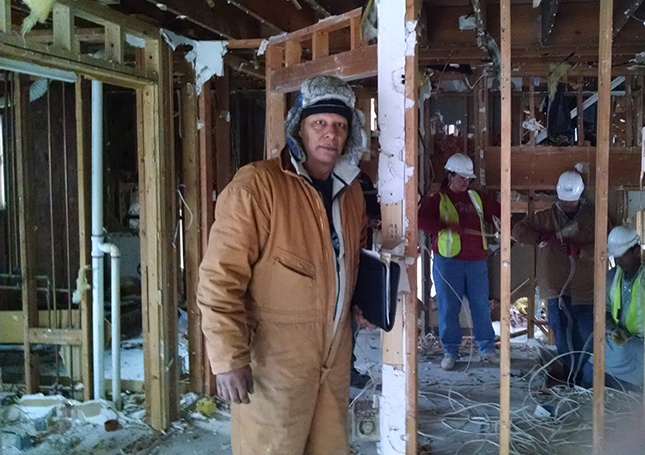
 The ground may be covered with snow, and temperatures wintertime cold, but an entire new “green” industry with job training is being created in both cities and rural areas here in the Northland. Native American workers for Miigwech Aki Deconstruction (Co.), based at Bemidji, recently completed deconstructing a commercial building in downtown Minneapolis and a large Twin Cities suburban home. They have also started deconstructing two abandoned properties in the Chippewa National Forest in northern Minnesota.
Salvage businesses have been around for centuries to rescue and reuse metals from sunken ships and old automobiles to wood and brick building materials. But creating social enterprises for environmental and employment training purposes is a new twist, and a new industry, built on old salvage practices.
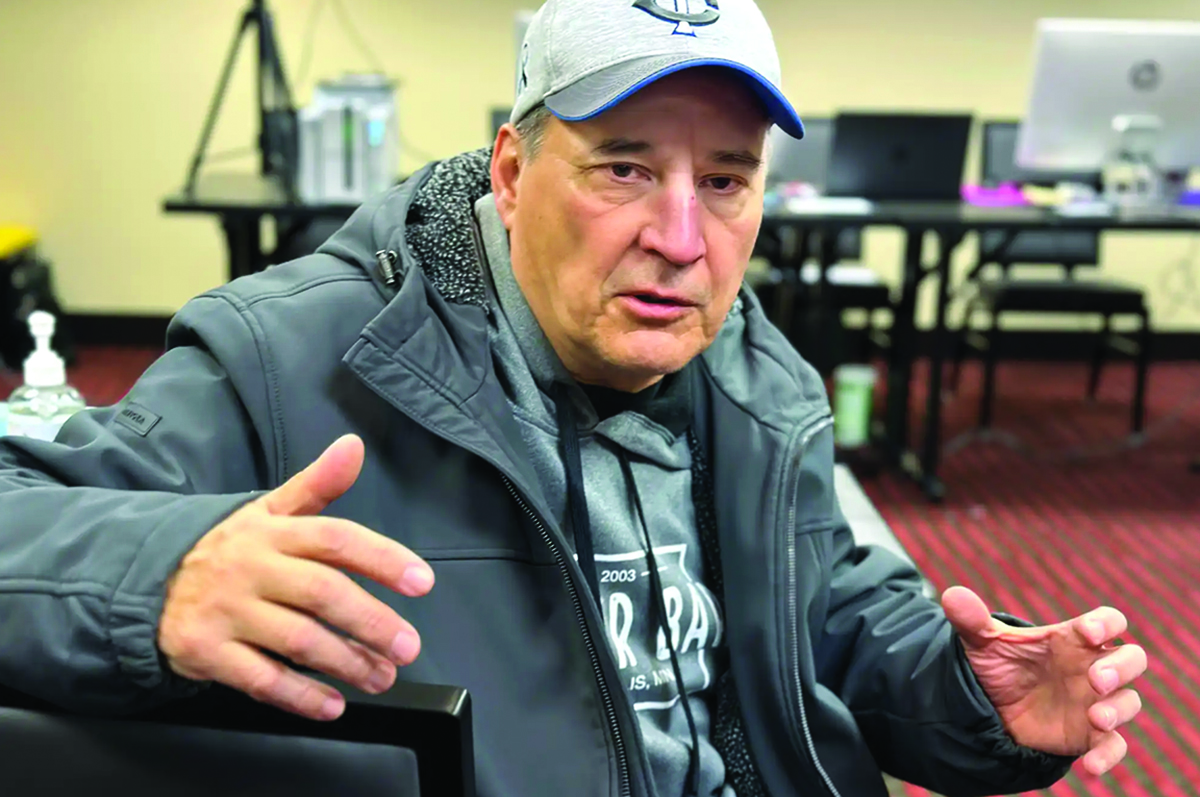
Deconstruction is an environmentally friendly alternative to demolition, said project director Chris Bedeau (Leech Lake Ojibwe). The purpose is to keep from 85 percent to 95 percent of building materials from simply being destroyed and dumped into landfills.
That objective fits the company name Miigwech Aki, (“Thank you Earth” in Ojibwe) and is consistent with Native American values and culture, Bedeau said.
The deconstruction company is a year-old creation of the Northwest Indian Community Development Center (NWICDC) at Bemidji and simultaneously provides construction training, financial literacy, work readiness and personal well-being training programs for its participants.
uleah Palmer, the NWICDC executive director said that training and work experiences are important for unemployed and underemployed Native Americans who aspire to meaningful jobs.
The Jobs Now Coalition nonprofit group estimates northern Minnesota jobs in the Bemidji area would require $17.55 per hour for a worker to support a family of four. Average pay for jobs in that area is currently $9.95 per hour.
Miigwech Aki Deconstruction can do some of that work. “I believe this initiative fits what we do as Native people,” Bedeau said.
"Our [company] tagline says it all: ‘Preserving our greatest resource, Mother Earth, one building at a time.’ Our social enterprise gives us the opportunity to have hands on experience on a daily basis, contributing to the preservation of our planet,” he said.
Deconstructing homes and commercial properties is emerging just as the U.S. is slowly turning to ways to convert wastes into energy, recycle materials for new uses, and change American culture away from being the world’s most wasteful society.
Researchers at Columbia University in New York and the Confederation of European Waste-to-Energy Plants have quantified the magnitude of what waste materials can be reused. Their data show Americans are still putting 69 percent of municipal solid waste, also called urban solid wastes, into landfills. In contrast, Germany, the Netherlands and Austria have effectively eliminated landfills while Belgium and Sweden have cut such dumping to 1 percent of its trash.
At a large home in Richfield being cleared for expanded road construction in December, Bedeau and crew were busily working to remove what remained of interior walls, exterior window and doorframes, and leftover insulation.
Some of the latter would later be processed into kitty litter, he said. New homebuilders would use the framework in good condition, and the interior two-by-fours and larger wood beams and supports in good condition for future new construction. Metals, such as expensive copper tubing, had already been salvaged and would be prepared for new uses.
Bedeau said. the economics of deconstruction and recycling is rapidly changing. Companies are springing up that want to use reclaimed materials, and the cost effectiveness of salvaging and reusing materials is constantly improving. “We’re not there yet,” he said, “but the days when knocking down structures and dumping everything are numbered.”
What’s emerging is a business climate that includes both formal and informal partnering with other companies, social enterprises and government agencies.
On the Minneapolis and Richfield projects, Miigwech Aki partnered with the metro-based Better Futures Minnesota. People and groups associated with health care, housing, workforce development, corrections and human services in the Twin Cities founded it in 2007. Helpful to its deconstruction work, Better Futures Minnesota operates a warehouse for salvaged materials in Golden Valley.
An unofficial partner was the American Indian OIC office in Minneapolis. “We work in the same areas as the NWICDC in Bemidji, so we cooperate however we can,” said Joe Hobot, president of AIOIC.
That cooperation and collaboration included providing Bedeau an office to use when working on projects in the Twin Cities. And, it included use of classrooms for personal, health and safety training programs for 25 participating crewmembers.
Just as working with Better Futures Minnesota involved training for underemployed, underserved minority Minnesotans, collaborating with AIOIC was a logical extension of Miigwech Aki’s work with Native Americans. AIOIC was founded in 1979 to provide training and work development opportunities; the Bemidji NWICDC, known as NWIOIC until December, got started in 1985.
Hobot said the Minneapolis-based group has now worked in helping more than 20,000 people develop workplace skills since its founding. While initially focused on Native American training, it serves unemployed and underserved people regardless of backgrounds.
A more formal arrangement, however, involves Miigwech Aki’s current projects in the Chippewa National Forest. A memorandum of understanding (MOU) was established between the Bemidji deconstruction company and the U.S. Forest Service last year.
Darla Lenz, the forest supervisor for Chippewa National Forest, said Miigwech Aki is deconstructing two housing buildings that were used in past years by forest service workers. They are in remote areas of the huge, 666,623-acre national forest in Itasca, Cass and Beltrami counties – 75 percent is located in the Leech Lake Band’s reservation territory.
“Automobiles have become a convenient means of transportation,” Lenz said jokingly to explain why these remote properties had been abandoned. “Our employees like to live in towns and commute to work, too.” But in all seriousness, she said the wooden structures in the forest are ripe for deconstructing and reuse.
The Forest Service, a branch of the U.S. Department of Agriculture, and other government agencies are seeking ways to link with groups such as Miigwech Aki and carry out projects that are more environmentally sound, said Lenz. The two abandoned homes in the Chippewa, however, is the first such project that she knows about for her agency in Minnesota.
Bedeau said government agencies are warming to the idea of deconstructing and recycling and not just quick turnaround demolition. Both the U.S. and and Minnesota Departments of Transportation were involved in road expansion projects. Similarly, the U.S. Department of Labor and human service agencies see the benefits of developing work skills.
What’s more, he said, there is growing awareness of the environmental and economic benefits of keeping good materials out of landfills. Salvaged lumber is used as raw material by furniture, cabinet and flooring manufacturers; larger dimensional lumber is resurfaced and cut into lumber by mills for reuse in home and commercial buildings.
This deconstructing, then, gives Native American participants more than work experience and employment. Bedeau said, “We are part of making it better for the next generation of all people.”
For more information on Bemidji NWICDC and Miigwech Aki, see: http://nwicdc.org/
For more information on American waste, see: www.greentechmedia.com/
articles/read/Look-at-How-Much-Waste-America-Puts-Into-Landfills-Compared-to-Europe .