


By Allison Herrera/MPR News
Leonard Peltier’s home on the Turtle Mountain Band of Chippewa reservation is nestled among green prairie grasses at the end of a tree-lined gravel road. His small yard and 2-bedroom home sit below the big skies of North Dakota. In the driveway sits an old van that he’s determined to fix. He calls it his Indian Car.
It’s been four months since Peltier moved into his new home. It’s also the first time since Jimmy Carter was president that Peltier lived outside of a prison cell. He said the transition to a comfortable new home in Belcourt, N.D., is “awesome.”
“Coming from that cell to this is like, I guess what heaven must feel like, the Great Spirit, the happy hunting ground must feel like,” Peltier said with a soft smile. In one of the first lengthy interviews since he was released from prison in February, Peltier described his health and the decades he spent living behind bars. He also described his life as a free man after President Joe Biden issued a last-minute commutation of Peltier’s two life sentences for his involvement in the shooting deaths of two FBI agents on the Pine Ridge Indian Reservation in South Dakota 50 years ago.
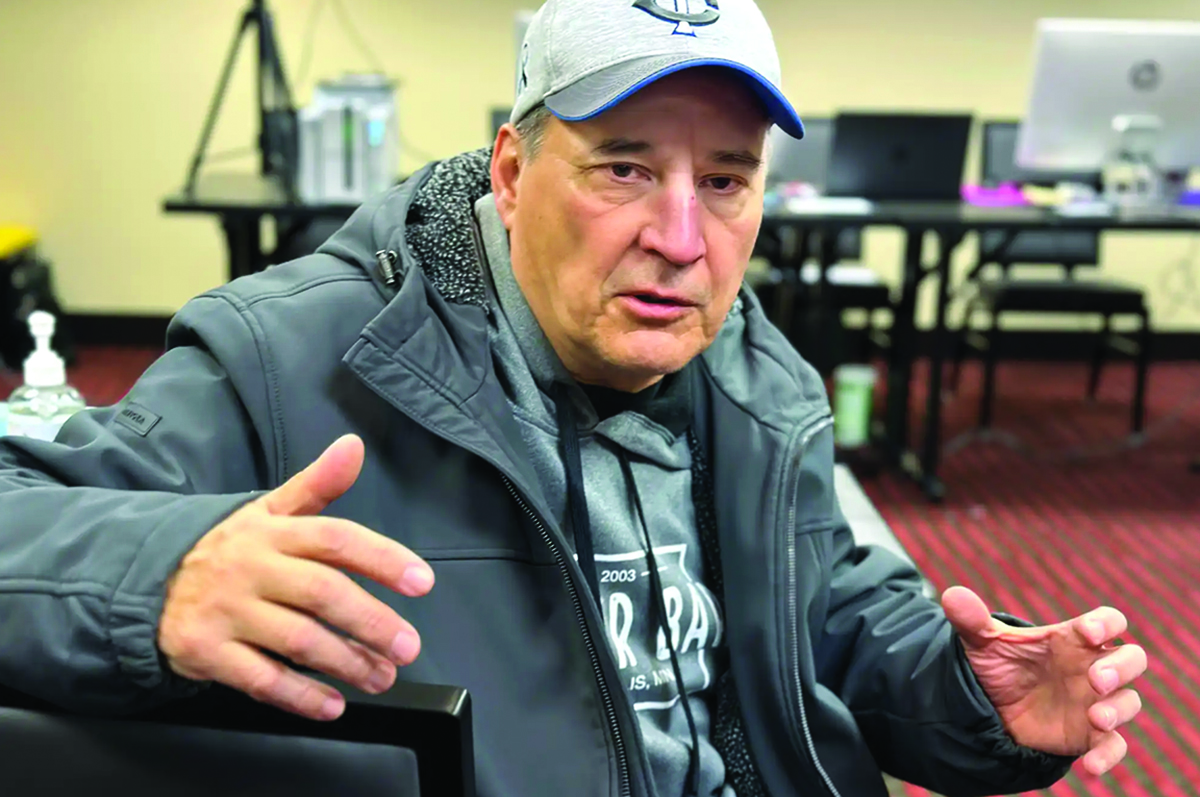
During the interview at his kitchen table, Peltier’s salt and pepper hair was pulled back into a braid. He still has his signature mustache, but it’s greying and thinning. He also joked that he wanted Botox “to hide the wrinkles.” Peltier told jokes, teased his home health aide and drank countless cups of coffee while recounting his life.
But despite his gentle, grandfatherly demeanor, Peltier harbors resentment about the events that took place during the occupation that happened at Wounded Knee, the violence that occurred on the reservation afterwards and the trial in Fargo, N.D., that led to nearly five decades of imprisonment. “Goddamn right I’m bitter,” Peltier said. “Otherwise, I would have been guilty. Only the guilty would not be bitter.”
He said he has no regrets standing up for his people.
“Hell no! I would stand up for them again today, if it cost me the rest of my life,” he said. “I don’t care. I believe what we were fighting for.”
Lekši Leonard
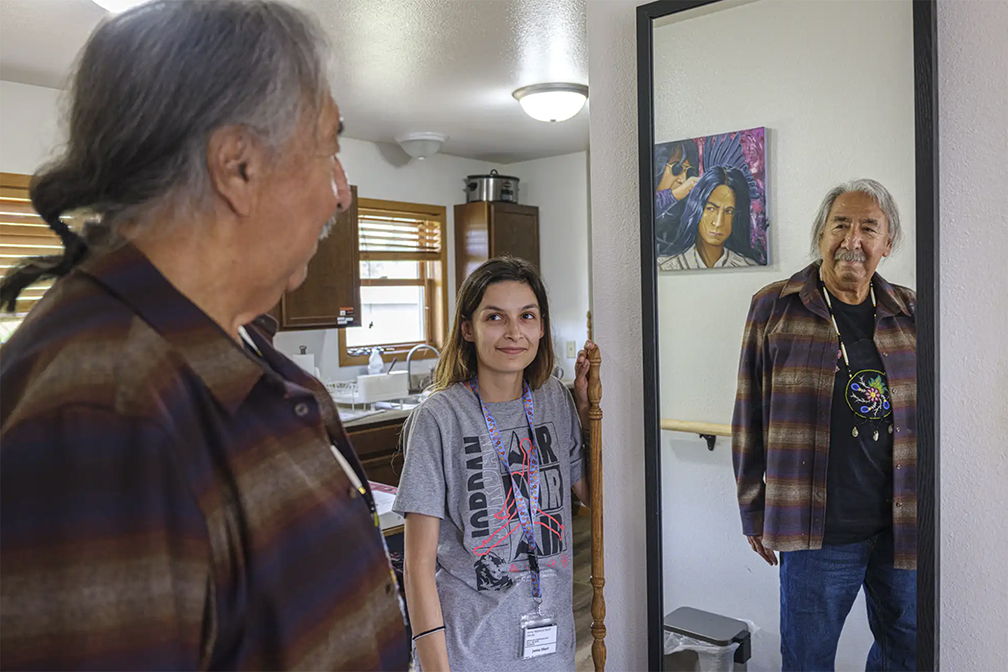
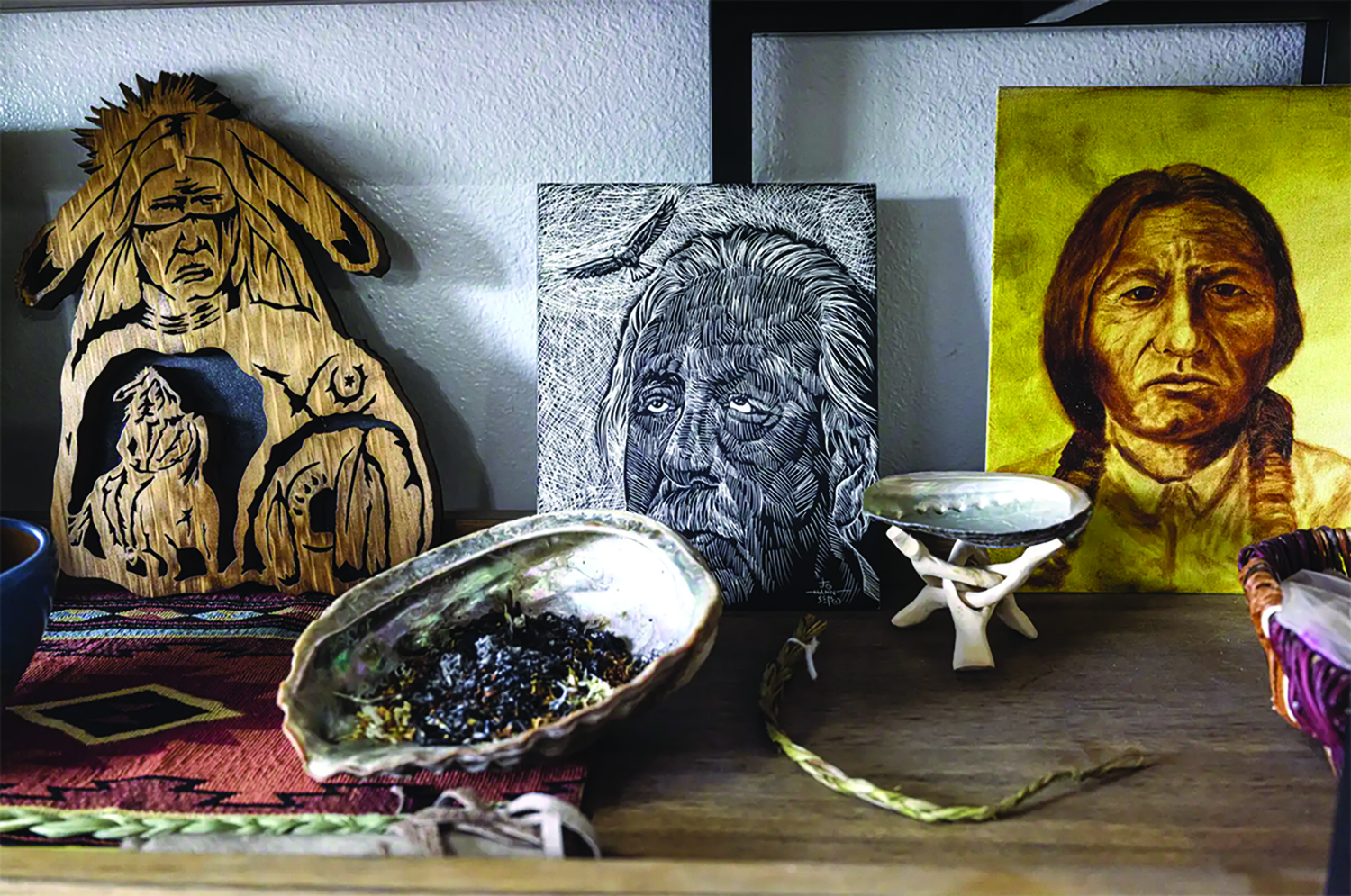
Peltier is now an elder in his community, a storyteller with a lot of colorful tales to tell. A walk through his home highlights his history. It’s full of photos, blankets, memorabilia and gifts he’s received since he moved in. There are paintings of Indigenous people doing everyday things. One is shaded in dark purple and features a woman braiding her husband’s hair.
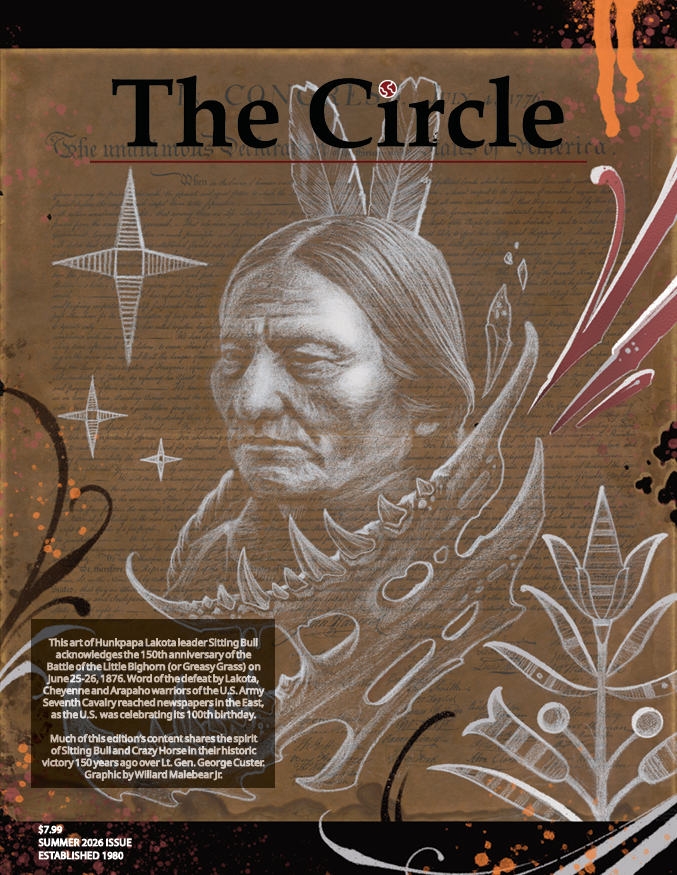
Peltier’s own artwork is also on the walls. The paintings — done during his time in prison — were inspired by famous Native Americans like Crazy Horse and Sitting Bull.
“I usually would draw them with chalk first. I would draw it on a canvas,” Peltier explained. “Then I could erase it easy instead of drawing with pencil.”
Peltier also showed off gifts from world leaders like Evo Morales. The former president of Bolivia sent Peltier a wooden statue of Túpac Katari, an Indigenous leader from the 1700s that led a rebellion against Spanish colonialists.
Since Peltier’s incarceration in 1977, celebrities such as Marlon Brando, Robert Redford, Willie Nelson and Bonnie Raitt have called for his release. The Dalai Lama and Archbishop Desmond Tutu also advocated for his freedom.
Peltier is regarded by many as one of America’s oldest political prisoners. They argue he was illegally charged and imprisoned for protecting his people on that fateful day on the Pine Ridge Indian Reservation in June of 1975. Law enforcement and a jury disagreed, and Peltier was forced to serve most of his life in the federal prison system. He was imprisoned in Fort Leavenworth, Kan., Lewisburg, Pa., and Coleman 1 in Florida.
His image has donned thousands of “Free Leonard Peltier” bumper stickers and posters and has been associated with the fight against injustice worldwide.
“I feel honored about it. I don’t feel like I’m any better than them or anybody else,” he said about his image being used all over the world.
Despite his celebrity, those close to Peltier know him as Lekši Leonard, a respectful Dakota phrase meaning uncle. As for future activism, Peltier said he may be too old to march in the streets, but he wants to use his standing to fight what he sees as chronic substance abuse disorder. He’s troubled by youth drug use.
“It’s killing us,” he said.
There have also been other adjustments. Before prison, Peltier’s preferred classic rock was played on record players. He’s now playing music through an Alexa speaker.
Peltier also said his health has greatly improved. When he left prison, Peltier said he could barely walk.
“I think I was on my death bed,” Peltier said.
Now, he’s no longer on his diabetes medication and his heart condition was downgraded from being dire to something to monitor.
“I’m starting to walk good now. My voice is still a little messed up, but I’m able to speak a lot better now, and I don’t feel as tired and constantly in pain,” he said. “I think I’m starting to pull out of it.”
He also said he is expected to receive surgery to help his poor eyesight.
Peltier remains close with his son Chauncey, who lives in Oregon, and his grandson Cyrus, who lives in Grand Forks, N.D. He said the two had visited him in Belcourt. He’s also excited to see his great-granddaughter, whom he bragged about being so smart and was going to win, “all kinds of medals” for swimming.
He said he remains angry that he lost so much family time.
‘They expected me to die in prison’
When Biden issued Peltier’s commutation during the final minutes of his presidency, he made it clear it wasn’t a pardon. Still, the FBI Agents Association called Biden’s action a “disgraceful act” that is a “cruel betrayal” of FBI Special Agents Jack Coler and Ronald Williams.
During one of his many appeals, Peltier’s first-degree murder charges were upheld to aiding and abetting after ballistics tests revealed that the gun the prosecution linked to Peltier didn’t match the gun that shot the agents.
In his book, “Prison Writings: My Life Is My Sundance,” Peltier expressed remorse over the deaths of the two agents and sent his sympathies to their families. In the interview he again expressed remorse over their deaths.
Peltier said he was treated well by the prison guards and staff during his last years in prison.
But he also remains defiant, vehemently denying any involvement with the murders. He said his anger over what he called a wrongful conviction helped him through decades of imprisonment.
“I’m pissed off, not only what they did to me, but what they did to my people,” he said referring to the racism and boarding school violence that happened to his generation.
He also argued that “They were killing us,” referring to the violence between the American Indian Movement (AIM) and those opposed to AIM on the Pine Ridge Indian Reservation in the 1970s.
The violence from that day shaped the rest of Peltier’s life including the murder convictions, his imprisonment, the calls for his release and his commutation this year. During his homecoming after his release, Peltier shouted to the crowd, “I beat the bastards.”
When asked what he meant by that, Peltier responded, “They expected me to die in prison.”
Minnesota Public Radio News can be heard on MPR’s statewide radio network or online.