

The Mille Lacs Band of Ojibwe is denouncing a decision from Mille Lacs County official to end a cooperative law enforcement agreement with the band.
The county says it revoked the agreement due to a dispute over state law. But what’s really at the heart of the disagreement is a long-running dispute over the band’s reservation boundaries.
The unanimous decision ends about 25 years of cooperation between the band’s police department and the county sheriff’s office.
Mille Lacs County Attorney Joe Walsh says the cooperative agreement had ceased being cooperative.
“There’s been a breakdown in communication between the tribal police department and the Mille Lacs County Attorney’s Office, between the Mille Lacs County Sheriff’s Office and the Mille Lacs tribal police department that is tremendously concerning to me.”
The deal had allowed band police officers to respond when they saw anyone committing a crime on the reservation. It also allowed the tribe’s officers and sheriff’s deputies to call each other for backup.
The communication breakdown began about a year and a half ago, Walsh said, after the band applied to the Department of Justice to allow federal prosecutors to also charge crimes committed on the reservation.
As part of that application, which the federal government approved early this year, the Department of the Interior issued an opinion on a decades-old battle over what constitutes the band’s reservation.
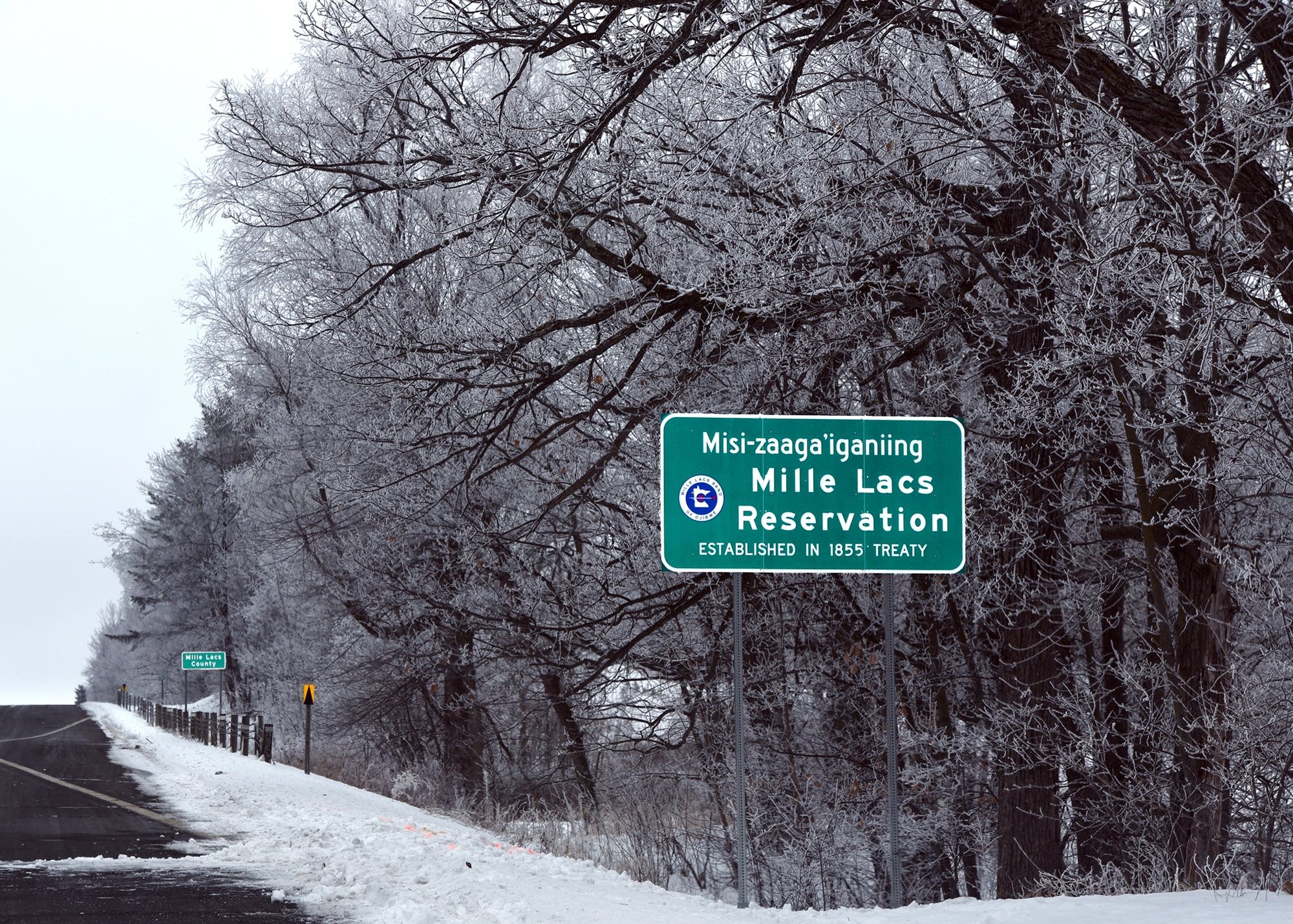
The band argues it consists of the 61,000 acres set aside in an 1855 treaty with the federal government. That area spans the entire southern shoreline of Lake Mille Lacs.
However, the county says it’s limited to land held in trust for the band by the federal government – only about 3,000 or 4,000 acres.
In effect, Walsh argues, the band leveraged a decision about law enforcement to advance its point of view on the much broader reservation boundary question.
“All that Mille Lacs County wants is a truly cooperative relationship with the Mille Lacs Band,” he said, “and to put aside this boundary issue to be resolved separately.”
In response, Mille Lacs Band Chief Executive Melanie Benjamin said the band had no influence on the federal government’s decision. She argues the county’s decision places politics over public safety.
“It’s plain and simple, if you end a law enforcement agreement, apparently you’re not that concerned about the public safety of individuals,” Benjamin said.
And public safety is a big issue on the Mille Lacs reservation right now. Benjamin says there’s a rising tide of drugs and violence on the reservation, with more than 1,600 crimes committed since 2013. And the band cites a problem called “rez hopping,” where criminals travel from reservation to reservation to try slipping through jurisdictional cracks.
Jessica Intermill, a founding member of the Hogen Adams law firm in St. Paul, says cooperative agreements between counties and tribes allow officers to focus on stopping crime.
“What these agreements really allow people to do, they allow the first responders to be the helpers they want to be without asking those jurisdictional questions,” said Intermill, who specializes in Indian law.
It’s unclear how those jurisdictional questions will be resolved after the county board’s vote goes into effect on July 21.
County Attorney Joe Walsh says he plans to ask the state Attorney General’s office to issue an opinion on how much authority the band’s police will have without a state cooperating agreement.
Meanwhile, Mille Lacs Band of Ojibwe Solicitor General Todd Matha says the department will continue to do what it’s always done.
“Our police officers are going to provide the same level of law enforcement services that they always have and that the community has come to rely on,” Matha said. “We believe we have that authority by virtue of federal law, tribal law, as well as state law.”
But the Mille Lacs Band says response times could be affected if sheriff’s deputies are farther away than tribal cops.
To address that issue, the county is planning to hire 10 additional deputies.
Minnesota Public Radio News can be heard on MPR’s statewide radio network or online at http://www.mpr.org