

By Gracie Stockton/MPR
You may have heard of Betty Whiteout, Ctrl Salt Delete, Sleetwood Mac or Plowy McPlowface – past winners of the Minnesota Department of Transportation’s Name a Snowplow Contest. And while the now-annual event garners thousands of punny monikers, some plow drivers are hoping it’s an opportunity to keep Indigenous languages alive, one truck at a time.
The contest was born in December 2020, during the COVID-19 pandemic. It became wildly popular – 24,000 entries strong – as a much-needed moment of levity for Minnesotans during a dark, isolated time. Anne Meyer, who works for MnDOT, said the idea came from Scotland, where people have been naming snowplows for years.
MnDOT now has 24 named plows on the road, and while the contest is fun for everyone, it’s also a chance to build cultural awareness.
Christopher Chee, a member of the Diné Nation, works for MnDOT out of Redwood Falls in southwest Minnesota. He lives in the Lower Sioux Indian community where his wife is from, plowing in the winter and doing road maintenance in the summer.
In his previous job as roads director for the Lower Sioux Community, he worked with the city of Redwood Falls, Redwood County, the tribal council and MnDOT to become the first tribal nation in the state to have dual-language road signs welcoming people in Dakota and English. The signs went up in 2016.
During last year’s Name a Snowplow Contest, he wanted to build on his work. He encouraged friends to send in Native language names, and he submitted one in Dakota.
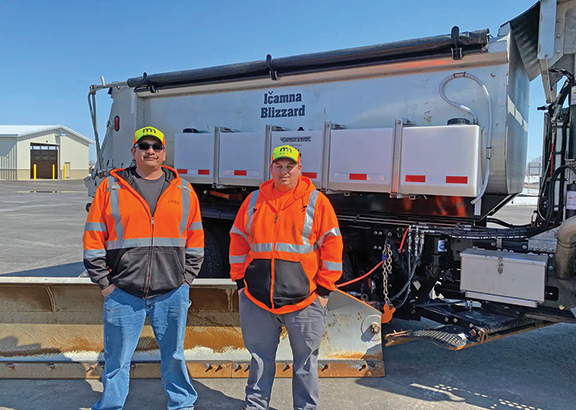
“‘I amna’ means ‘snowstorm’ or ‘blizzard,’” Chee said. “And being a snowplow driver, we’re out there in the blizzards, in the snowstorms keeping the roads open, rescuing people if we have to, making way for troopers and paramedics.”
I amna made it to the second to last round of the contest but didn’t make the final cut. One of his supervisors noticed Chee’s disappointment, and promised to see what he could do.
Sure enough, two weeks later, Chee walked into the breakroom and saw an I amna vinyl sticker on the table. Now Chee and his truck partner of three years, Jovi Lund – who is a tribal member of the Lower Sioux Indian Community – drive their plow with pride.
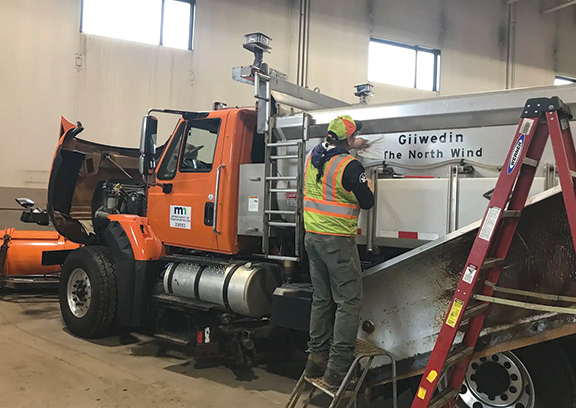
Mike Connor is another driver who helped push for a plow with an Indigenous name: Giiwedin, Ojibwe for “the North Wind.”
“Naming this plow helps with building cultural awareness between the state and tribal entities,” said Connor, a member of the Bois Forte Band of Chippewa and a MnDOT driver. “It’s important to show the traditions and language.”
Connor said the state and tribal governments have had a formal relationship, but dubbing the plow with an Indigenous name was a sign of goodwill.
“There’s a lot of policies and procedures between tribes and MnDOT, and it is encouraging to see the engagement with the tribes,” he said.
A second plow in northeast Minnesota bears the name Goonodaabaan. It’s a combination of the Ojibwe words “goon” and “odaabaan,” which translate to “snow,” and “sleigh” or “sled.“
MnDOT staff selected a few dozen names from the more than 7,000 entries for the public to vote on, which was held in January, Meyer said.
Chee hopes more tribal nations and ethnic groups from around the state will submit names in languages other than English this year. He hopes for at least one truck with an Indigenous name on each of Minnesota’s 11 tribal nations.
“Have another up by Red Lake, have another around Shakopee, have another one at Treasure Island, Upper Sioux, and from there, White Earth,” he said.
Chee said he’s happy that many Indigenous communities are investing in teaching young people their native languages. And, he said, something as simple as a dual language road sign or a name on a snowplow can help with that mission.