

Review by Deborah Locke
Three biographies for children in grades three to five highlight the lives of important American Indian from the Upper Midwest: Charles Albert Bender, the first Minnesotan inducted into the National Baseball Hall of Fame; Ella Cara Deloria, Dakota language preservationist and nationally known anthropologist; and Peggy Flanagan, current Minnesota Lieutenant Governor.
The stories show children the importance of figuring out what they are good at, and how to push aside obstacles in reaching a goal. For that reason, they belong in every book collection for children in the state. The stories are inspirational, and bring the reader details of history they never knew.
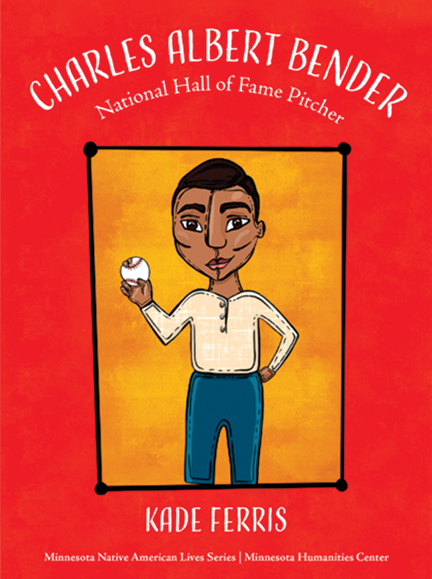
As an example, I imagine a parent reading the bedtime story of World Series winning Charles Albert Bender with a child, and each would learn of Bender’s pitching invention that is in use by the major baseball leagues today. Bender’s gift for throwing a baseball was perfected when as a child in the late 1880s, he hand-picked rocks from a farming field on the White Earth Reservation ahead of his father who operated a horse-drawn plow. With practice, Bender developed a strong throwing arm and good eye.
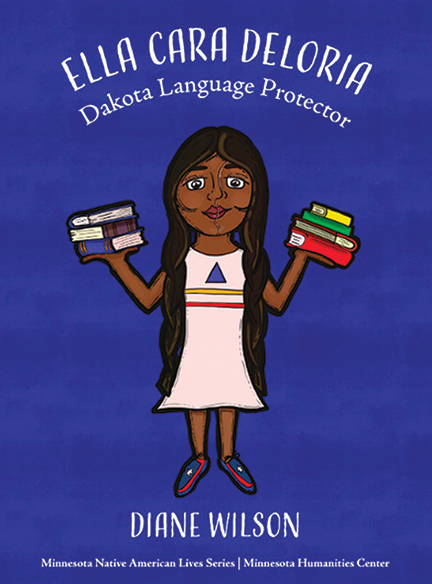
Or they’ll learn of Ella Deloria’s successful efforts to tell the truth about Dakota culture, history and family dynamics, replacing the false narratives of the day. Deloria’s book, Water Lily, is required reading for college anthropology students to this day.
Parents reading the Peggy Flanagan biography with their children may be surprised to learn that among her jobs of public service, Peggy conducted a kind of bootcamp that taught elected officials how to win a campaign. One of the participants was Gov. Tim Walz, who later ran for governor and asked Flanagan to be his Lieutenant Governor.
All three overcame hardship and in some instances, blatant racism, to rise to the heights of their professions. This was most evident in the story of Charles Albert Bender (1884-1954), who was treated like a mascot through much of his career, referred to as “Chief,” and subjected to war whoops from non-Natives who recognized him.
In the 1910s and 1920s, Bender was one of the most talented pitchers to ever pick up a baseball. He attended Carlisle Indian Industrial School in Pennsylvania, planning to become a watchmaker. Instead, Bender’s talent for throwing a ball came to the attention of legendary coach Glenn Warner, who also coached Olympic gold medalist Jim Thorpe (Sac/Fox Nation).
College ball led to the pitcher’s mound with the Philadelphia Athletics. By the end of his career as a professional athlete, Bender earned a 212–127 win-loss record and pitched three complete games in a single World Series, tying a pitching record. He developed a “slider” fast-breaking curveball pitch that appeared straight but moved away from the batter.
Ella Cara Deloria (Yankton Sioux; 1889-1971) became one of the first American Indian ethnologists in the U.S., and attended Teacher’s College at Columbia University, New York. There she met Dr. Franz Boas, a nationally known anthropologist who hired Deloria to teach Lakota and later helped Boas with Lakota language translations. Deloria co-authored articles with Boas that brought national recognition to her work as a linguist. Her book, Dakota Texts (1932) is one of the most important books ever written on Teton Dakota oral stories. The novel Waterlily, published posthumously in 1988, focused on the lives of Dakota women.
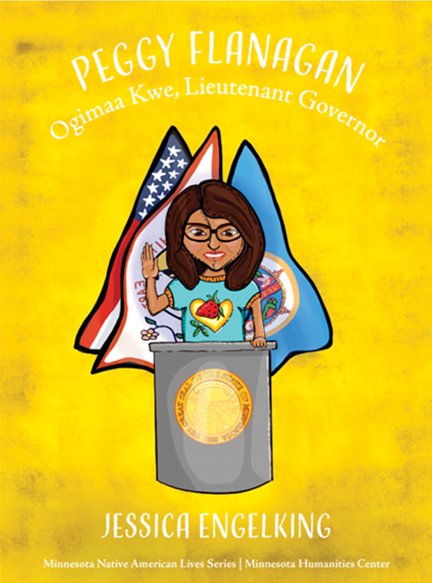
Finally, Peggy Flanagan, Ojimaa Kwe, Lieutenant Governor tells the story of Minnesota’s second most powerful elected official, starting with her childhood in St. Louis Park. Her mother worked full-time yet was eligible for food stamps. Flanagan, embarrassed by telltale signs of poverty, sought to hide her reduced fare lunch ticket each day. School held no interest, and she felt isolated, as one of the school’s few Native students.
Her grade point average was 1.75 at graduation, and she spent a difficult first year of college at St. Cloud State University where dorm residents taped racial slurs to her door. A choral director advised Flanagan to attend the University of Minnesota and there, she found footing through classes in Ojibwe language and history. Flanagan went on to public service jobs, which included the Little Earth Housing Project and the Children’s Defense Fund. She was elected to the Minneapolis School Board and as a state legislator in the House of Representatives.
Then came Tim Walz who wanted Flanagan to serve as his Lieutenant Governor and join his campaign. They won, and on inauguration day in early 2019, Flanagan swore her oath of office on an Ojibwe Bible. A drum group provided music and her mother and her father watched from the audience.
These stories are magic. They show transformation, and the steely resolve of the human spirit.
The Minnesota Humanities Center and the Minnesota Indian Affairs Council published the three books, known as the Minnesota Native American Lives Series (2020). They are: “Ella Cara Deloria, Dakota Language Protector” by Diane Wilson; “Charles Albert Bender, National Hall of Fame Pitcher,” by Kade Ferris; and “Peggy Flanagan, Ogimaa Kwe, Lieutenant Governor” by Jessica Engelking.