


By Dan Gunderson/MPR News
When Jennie Murillo was in high school, she remembers going to her local Indian Health Service clinic in southeast Idaho for regular checkups and mostly seeing older, white male physicians.
One day, though, she was seen by a Native American woman.
“I was so taken aback by that,” said Murillo, 24, a member of the Shoshone-Bannock Tribes and an incoming student at the University of Minnesota’s medical school in Duluth.
While shock was Murillo’s first reaction, she then felt inspired. “I saw myself,” she said. “I want to be able to help take care of my community, my cousins, [and] make sure that people are getting the care they deserve.”
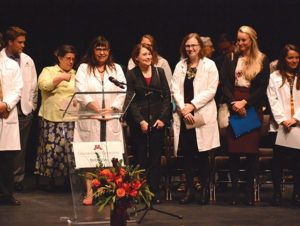
Murillo is among the record number of incoming Native American students who take part in the school’s White Coat Ceremony in August. Twelve of the 65 incoming students are Native American – 18 percent. The doctors-to-be could help address a shortage of American Indian physicians nationwide.
According to the Association of American Medical Colleges, in the 2017-2018 academic year, only 21 graduates nationwide out of nearly 20,000 were Native American – about 0.1 percent. Native Americans make up about 2 percent of the country’s population.
“We certainly need better representation than that. This is a crisis,” said Dr. Mary Owen, who directs the Center for American Indian Minority Health at the University of Minnesota Medical School, Duluth campus. She’s also a Native physician who graduated from the school in 2000.
Since 1972, the school has graduated 182 Native American students – the second most of any medical school in the country.
Owen said it’s important to train more Native American doctors because they’re more likely to go back and serve in tribal communities after they graduate. Right now, there’s a 50 percent vacancy rate for physicians at the Indian Health Service facilities in Minnesota, she said.
“So, these 12 students matter, as do any other students who want to work in the Indian Health Service and work for our communities,” she said.
Owen said Native American patients also do better when they see Native American doctors. For years, Native Americans have died at significantly higher rates than other Americans from diabetes, injuries, liver and respiratory diseases.
“Patients are more likely to follow through and have better outcomes when they are served by people who look like them,” she said.
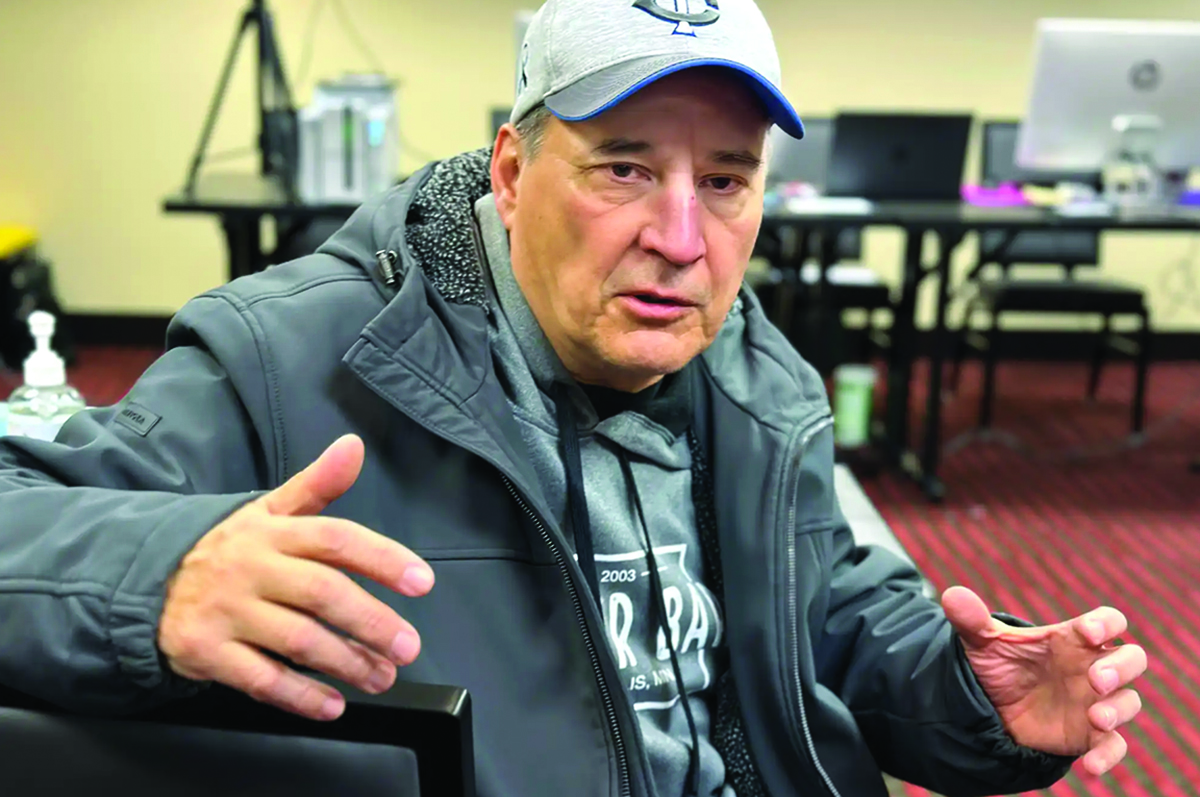
As the only Native American physician practicing on the Fond du Lac reservation outside Cloquet, Minn., Dr. Arne Vainio said he sees that firsthand.
“People like physicians that understand who they are, and the minute I started here I had patients gravitate toward me just for that reason,” said Vainio, who has been a physician for 22 years.
Vainio said patients like that he knows and respects cultural traditions. And his experience working construction before attending medical school helps him relate to people and explain complicated health issues, he said.
“Sometimes when we’re talking about lung problems or heart problems, you know, ‘a heart is a two-stage pump with a really good set of valves in it.’ And people understand that,” he said.
Vainio said recruiting Native American doctors must start early, so he encourages young students he sees at the clinic to pursue medicine.
Growing up in the Twin Cities, Tegan Carr said she didn’t get that message. The incoming medical student is Native American and African-American. She’s 29 and has worked for years to get into medical school – a goal that she said often felt unattainable.
Carr said she wants to serve as a role model for future doctors.
“It’s something that I carry with me. It’s a responsibility that I feel that I hold,” she said.
Minnesota Public Radio News can be heard on MPR’s statewide radio network or online.