

By Lee Egerstrom
For Janice LaFloe and staff at the Montessori American Indian Childcare Center in St. Paul, operating a preschool program without young children present during the coronavirus pandemic has been both challenging and emotionally draining.
“We miss the kids,” LaFloe said. “We worry about families. We’ve been finding ways to interact, but it isn’t the same.”
That is about to change – to some extent – when the childcare center reopens on June 1. Children will learn precautions for coexisting with the threat of COVID-19.
Some but not all of the center’s 19 preschoolers will return to classes and daycare activities now that Minnesota’s shelter in place rules have expired.
LaFloe (Turtle Mountain Ojibwe), founded MAICC in 2014. It is located at 1909 Ivy Ave. E. on St. Paul’s East Side.
Licensed as a day care facility, the center operates as a Montessori preschool primarily focused on serving Native American children. She and the center’s staff of eight tailor programs and materials for Native youngsters in a process she refers to as “Indigenizing.”
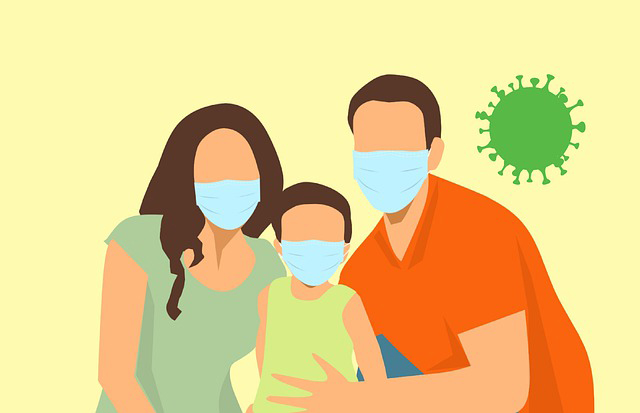
Come June, the children will learn about social distancing, wearing masks, hygiene (hand washing) and limiting access to one another in these trying times.
Laura Trujillo, associate director and head of school, said she did extensive research with health agencies and from other Montessori schools to prepare plans for MAICC’s reopening.
Children will be kept apart with assigned seats at tables. They will eat lunch at those same tables and not together at communal tables. They will be properly distanced in classes and when do meet in circles, she added.
Only one family will be allowed to enter the building at any given time. Anyone who has reason to enter the building will be masked, will wash hands on entry, and will be given temperature checks for fever or other possible symptoms.
“One of our concerns is when they (the children) go out to the playground at 12:30 each day,” said Trujillo (Leech Lake Ojibwe). “That will take close attention.”
While researching safety procedures from health agencies, Trujillo said she also checked precautions used by two other Montessori childcare programs that have already reopened.
Montessori concepts of education began in Italy and came to the United States in 1912. It is described as a child-centered approach that allows students to learn at their own pace while also encouraging cooperation and social development with others.
During the past two months of the COVID-19 shutdown, MAICC staff – called guides – provided activity packets, Zoom video conferences for storytelling, and music for the children and their families. This included a daily 11:30 a.m. “circle” gathering on a Zoom teleconference similar to what MAICC schedules when children are in attendance.
MAICC survived during the shutdown without cutting employment. This was helped by a Paycheck Protection Program (PPP) loan from the U.S. Small Business Administration. The loan is forgiven if the small business operator keeps retains employees for eight weeks.
“We got along financially. Emotionally, it has been a drain,” LaFloe said.
MAICC guides worry about the children when they don’t see them in person, she said. They worry about the 16 families and homes of the preschoolers. Fortunately, all members of the children’s families have remained healthy.
“A lot of parents are working from home, or trying to,” LaFloe said. “That isn’t easy when you have youngsters around.”
She knows people are stressed trying to cope with the threat of the virus, from losing jobs, being house-bound, and from worrying about others. There has been one suicide and one drug overdose death among her acquaintances.
If there is a silver lining to the coronavirus pandemic, it is that a lot of people are returning to their roots in caring for others, she said. “Concern for community has suffered,” she added, especially in urban societies over the past hundred to two-hundred years.
Come June, seeing children return to MAICC will be “more like normal,” LaFloe said, even if it isn’t how “normal” was in the past.
Whether the daycare and preschool stays open to children will depend on what happens with COVID-19 in Minnesota, the Twin Cities, and across the country in the weeks and months ahead, she said.
For information on how to keep children safe in childcare and classroom settings, please see the MN Department of Health MDH website at: https://www.health.state.mn.us/diseases/coronavirus/schools/index.html
They also have a reserouce guide lease find this resource guide aimed at helping families find support related to COVID-19, including economic, child care, mental health, and other supports, at https://mn.gov/mmb/childcare/families