
BY WINONA LADUKE
In late October, I attended the Enbridge pipeline hearings by the state of Minnesota. It’s been a long haul, I feel like I have been in five years of hearings, hanging in there with all sorts of committed citizens, heroines like Dawn Goodwin, Joanne Gagnon, and Tania Aubid, who, I swear have been at every hearing imaginable.
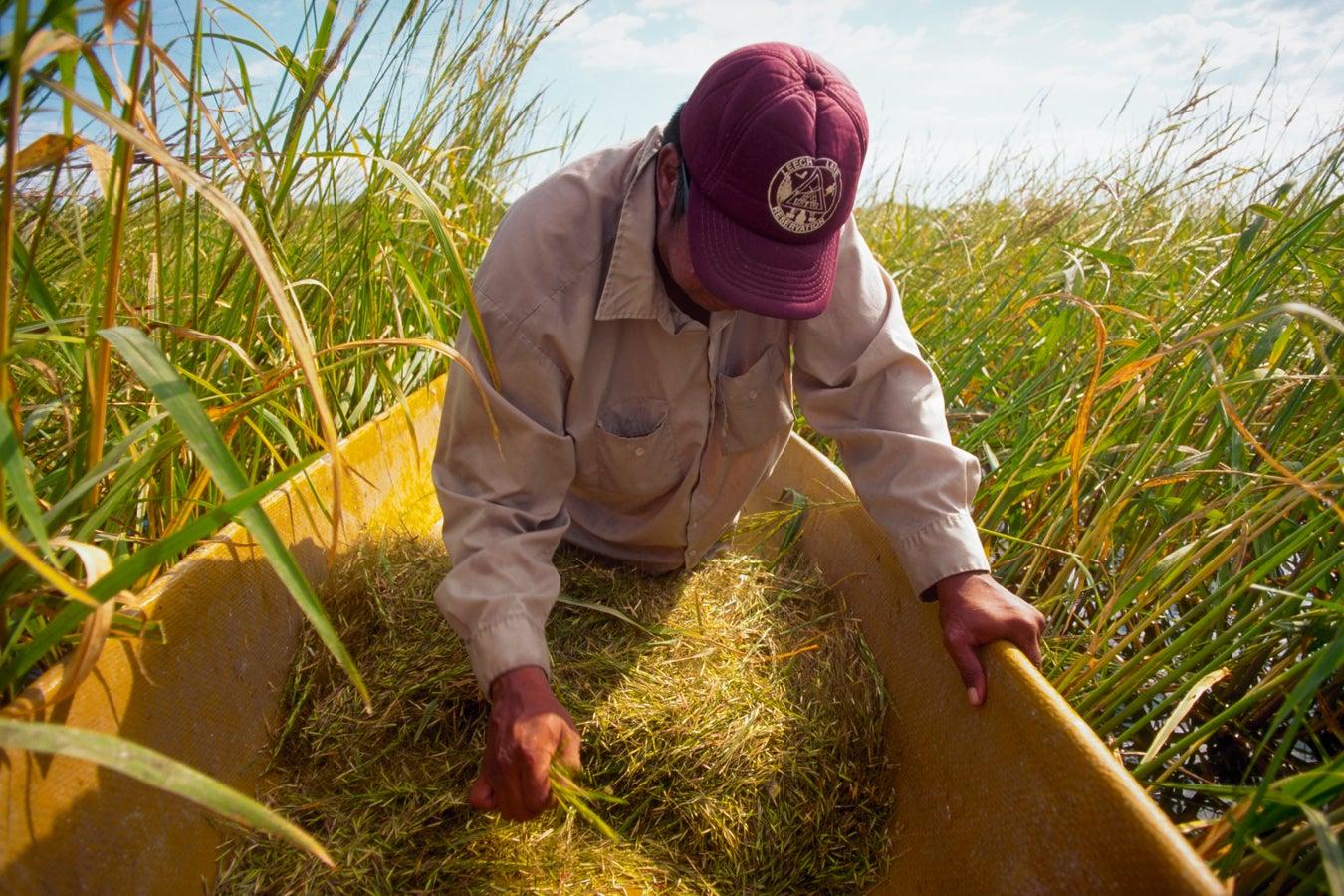
This time frame was particularly challenging, because there was a sulfide mining hearing in Bemidji (basically to change the standard of sulfides in the water and not protect wild rice), a Leech Lake Tribal hearing on the Anishinaabe Cumulative Impact Assessment on Line 3, and a Department of Commerce hearing in Cross Lake. How, at the end of the month, are we all supposed to get on our magic carpets and appear at all these hearings to protect our wild rice and people.
The White Earth Tribe and Leech Lake Tribe both held their own regulatory hearings in October, reviewing an Anishinaabe Cumulative Impact Assessment of the proposed Line 3 pipeline. This is a process parallel to the state EIS hearing, yet reaffirms that the Anishinaabeg have jurisdiction over this territory. Meanwhile, the state of Minnesota’s Department of Commerce has recommended against issuing a permit for Line 3, yet that is not the final word. This is the battle line. And it’s the last battle; the last big pipeline battle. Let me explain.
A few months ago there were four big pipelines proposed to bring Canada’s tar sands out of that land locked province of Alberta. Those pipelines were Enbridge’s Line 3, the Keystone Pipeline, Kinder Morgan’s Trans Mountain Pipeline from Alberta through British Columbia, and Energy East – the longest pipeline from the Alberta Tar Sands to New Brunswick, at 1,300 miles long. Both Energy East and the Keystone Pipeline were proposed by TransCanada.
Canada’s Premiere Justin Trudeau and Donald Trump were all about the jobs and economic boom this would mean. All beaming and everything.
Then reality started to hit. The pipes were already purchased from foreign pipe companies. The oil prices in the tar sands are not going up and there are more companies getting out of the tar sands than going in to them as an investment. Big banks have stopped investing in the dirty oil thanks to a worldwide divestment movement. Recently, US Bank has announced that it will end its $1.3 billion credit relationship with Enbridge, and on October 11, BNP Paribas, the 2nd largest bank in France and 4th largest corporate lender to Enbridge LLC, announced it will cease all funding of companies whose primary business is tar sands, fracking, or Arctic drilling.
That’s a result of hard work and a continuous lobbying by Indigenous led divestment group of Native women. This, combined with the Minnesota Department of Commerce recommending against the issuance of a certificate of need, has hurt Enbridge. But the company is doubling down, bussing hundreds of workers to hearings, and beginning a dirty campaign against opponents of their plans.
In the meantime, Enbridge has missed much of the opportunity to move on to renewables and post petroleum. Car companies are talking about electric cars. First it was Volvo committing to all electric cars, and just recently General Motors announced that the future was not in fossil fuel cars, but in electric cars. GM sold 10 million cars last year, ranging from pickups to SUVs to urban runabouts.
“General Motors believes the future is all-electric,” says Mark Reuss, the company’s head of product. “We are far along in our plan to lead the way to that future world.” That’s a lot of electric cars.
It turns out that no one will need that pipeline oil. Pipelines are expensive to build. On October 5, the longest tar sands pipeline proposal – $l5.7 billion Energy East – was scrapped by TransCanada. That pipeline had faced some stiff opposition from places like the Mayor of Montreal, and the Province of Quebec, where the Premier said that the line posed a significant risk to its freshwater resources.
Canadian oil economists pointed to economics – the decline of tar sands production and prices as a driving force for project cancellation, augmented by Premier Trudeaus’ more stringent review of pipeline projects, to include green house gas emissions and downstream impacts. One down, three to go.
TransCanada is also the proponent of the ill fated Keystone Pipeline, which many have thought will face certain resurrection now in the face of the Trump Administration and the loss of Energy East. However, as Fox News reported in June, “Keystone XL is facing a new challenge: The oil producers and refiners the pipeline was originally meant to serve aren’t interested in it anymore.” In other words, the company has no customers for the pipeline, and a pipeline without customers is not going to be built. So this is probably pretty unlikely, no matter how much fairy dust Trump can find.
The smallest of the Tar Sands pipeline proposals, Kinder Morgan’s Trans-Mountain, is enmired in legal battles with both the Province of British Columbia and the First Nations there. In other words, the company is getting sued by everyone.
That leaves us. Us and Enbridge. That is why the battle over Line 3 is going to be brutal. It is the last big tar sands pipeline battle in North America. Stay courageous. No one else wants a pipeline either, and it turns out we will still be driving around, even without Enbridge’s oil. We will have electric cars.