

 Columbus Day became a national holiday in 1937, under the Franklin D. Roosevelt administration. Italian lobbyists in America at the time wanted to honor Christopher Columbus as a heroic leader, claiming he “discovered a new world,” which would eventually become the most powerful nation on the planet. But as Indigenous people, that is not the experience nor the whole truth.
The truth is that Christopher Columbus was responsible for the extermination of Indigenous people in the present-day Caribbean. Through torture, slavery, rape, dismemberment and the transmission of fatal diseases, thousands upon thousands of Indigenous people perished.
Because of this, Native people feel deeply disenfranchised from the image of a man who committed such acts being honored and celebrated. Columbus Day as a holiday is seen by many in the Native community as an injustice, so Native and non-Native leaders took the initiative in educating the public about the true history of Columbus.
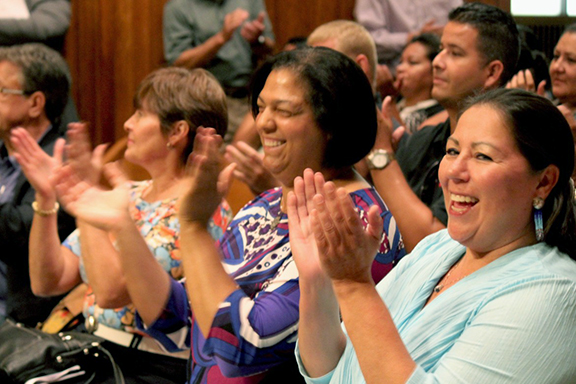
On Aug. 12, the City of Saint Paul passed in a unanimous seven to zero vote to recognize the second Monday in October as Indigenous People’s Day, in place of Christopher Columbus Day. This resolution was adopted just over a year after the City of Minneapolis also proclaimed the same title.
Minnesota American Indian Chamber of Commerce executive director, Joanne Whiterabbit (Ho-Chunk Nation of Wisconsin) credits the Saint Paul Human Rights and Equal Economic Opportunity Commission (HREEO) for taking the leadership role for bringing this resolution to the Mayor’s office to eventually be passed. “Saint Paul HREEO really did a lot of the leg work in getting the support of the Mayor Coleman’s office.” Whiterabbit assisted in the drafting of the resolution. After meeting with city officials, the resolution was endorsed by the Indian Affairs Council with the State of Minnesota, the oldest council nationwide to serve as a liaison between tribes and the state.
The Native American Community Development Institute (NACDI) based in Minneapolis’ Cultural Corridor on Franklin Avenue had done much of the work with the City of Minneapolis to pass a resolution to recognize the second Monday in October as Indigenous People’s Day in the spring of 2014. They had become part of the conversation to help with guiding the process to implement the same idea in the City of Saint Paul. NACDI was involved in hosting meetings and facilitate the discussion with elected officials of Saint Paul in their space.
Whiterabbit hopes that other cities in the state will follow suit. Looking to the future, there is a statewide Mayor’s convention of all the cities in Minnesota that takes place annually. Whiterabbit is hoping to present this idea of reclaiming our true history and replacing Columbus Day with Indigenous People’s Day throughout the state and so Minnesota would be a national leader for other cities across the country to propose the same.
Danielle DeLong Adams (Ho-Chunk) is an educator in the Indian Education program in Saint Paul, Minnesota and also a community leader and a mother. She thought it was important for her own children to be present during the passing of Indigenous People’s Day.
She shared her experience about the being at the event with her family, “It was very powerful to see city officials actually changing history for my children and grandchildren.” She believed that continuing to recognizing Columbus Day is perpetuating false truths of the history of Indigenous people. The underlying racism against Native people is evident when unveiling the historic events that happened in the process of colonizing America. Delong-Adams believes this proclamation is a path to reclaiming our voices as Native people. She thanked the Saint Paul City Council members including Dai Thao for responding to the voice of the Native community so that Native youth can begin to take back their identities.
There is much work left to be done to reconcile and heal Native communities. What happened when Columbus arrived in 1492 cannot be undone but Native people can begin to rediscover their worldview and celebrate survival.