

Citizens of Minnesota’s Ojibwe tribes sent notice to Gov. Mark Dayton last month of their intention to expand wild rice harvesting in a vast swath of off-reservation territory in northern Minnesota.
Over the past few years, Ojibwe people have harvested wild rice without state licensure within the boundaries of these ceded territories. Many hoped their actions would draw legal enforcement, allowing them a case to test their rights to land and water resources under the 1855 Treaty. Members of the 1855 Treaty Authority and other Ojibwe people in the state contend that, while their forefathers sold off large tracts of northern Minnesota to the government, those sales never included giving up the right to gather, hunt, and fish.
While some citations have been issued in past encounters with law enforcement, the government chose to drop the charges rather than allow the treaty to be contested.
The 1855 Treaty Authority, the independent oversight body which penned the notice to the State of Minnesota, say they want much more than to reaffirm their rights to gather wild rice inside the treaty area, which runs from about 40 miles west of Duluth to the North Dakota border, and from near the Ontario border to near Brainerd. They say they want to enter into an agreement with the state that recognizes their right to establish a regulatory power to protect the environment within the treaty boundary – including authority over major projects that threaten the environment, such as mines, powerlines and pipelines.
"We have offered to meet to initiate co-management of the natural resources of the 1855 territory previously, but Minnesota has continuously declined," the letter to Dayton says. "We remain willing to meet and work toward the goal of meaningful co-management and thoughtful environmental protection of our Chippewa treaty territories. However, we can be idle no more."
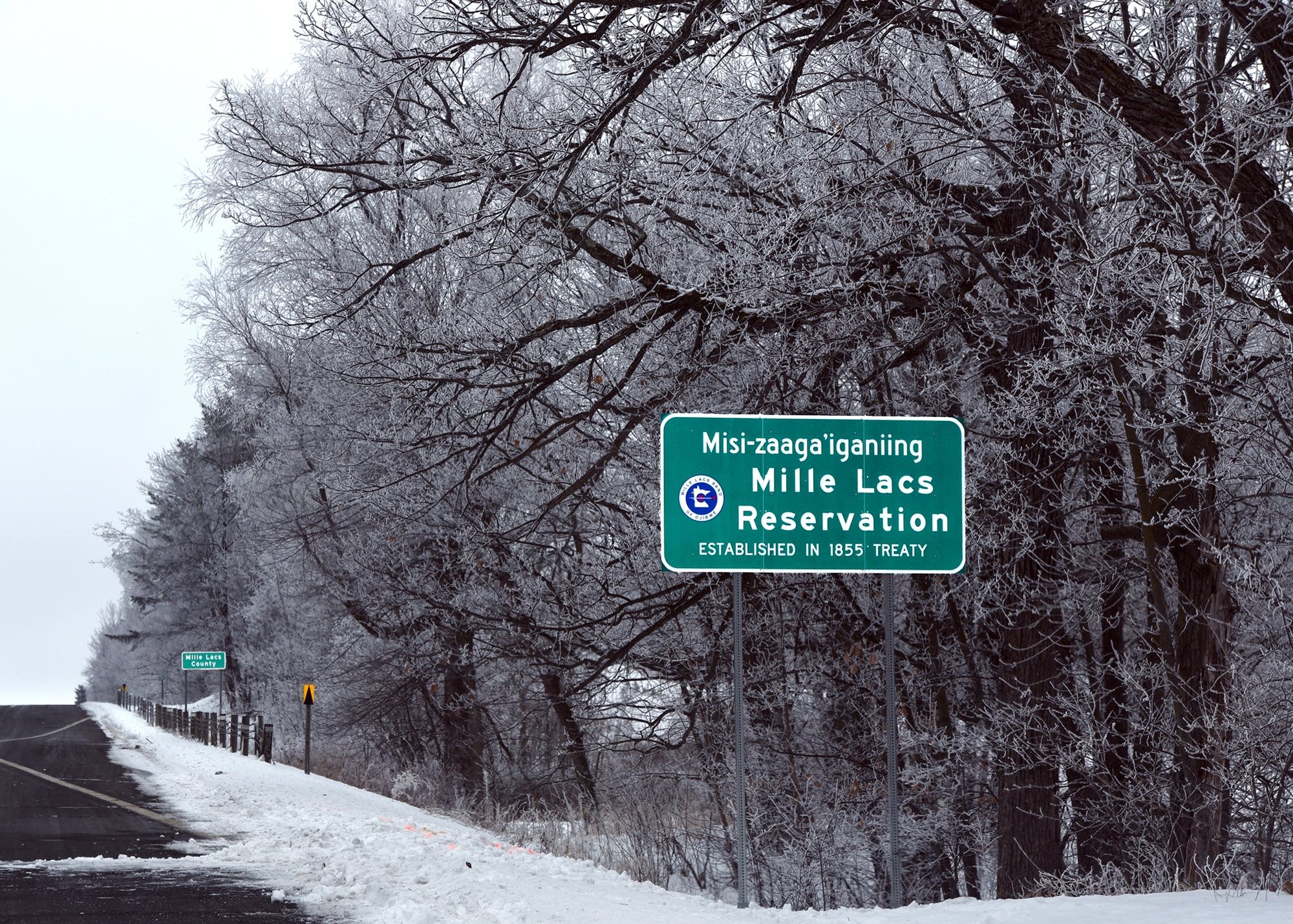
The letter also expressed apprehension about plans by the Canadian company Enbridge Energy to construct oil pipelines across the territory, as well as the struggling walleye population on Mille Lacs Lake. It stated that the Treaty Authority has sent a request to the environmental protection agency asking it to take immediate measures to protect the natural resources within the ceded areas.
“Wild rice the most important gift from the Creator that we are all taught to protect and respect as a sacred food and medicine,” Arthur “Archie” LaRose, the Authority’s chair said. “This is why we are seeking federal action to protect our essential freshwater resources and wild rice, forever.”
The 1855 Treaty Authority is independent of and unaffiliated with the state’s tribal governments and includes citizens of the Leech Lake, White Earth and Mille Lacs bands and the non-recognized Sandy Lake Band. Its chair, LaRose is also the secretary-treasurer of the Leech Lake Band, has accused the state of looking the other way when it comes to environmental abuses perpetrated by big business.
"From pipelines, to wild rice and walleye, the State of Minnesota does not appear to be protectively regulating the natural resources or pipelines, but rather defining acceptable levels of degradation in the land of sky blue waters for the profits of foreign corporations," said the letter signed by LaRose and Sandra Skinaway, the group’s secretary-treasurer and chairwoman of the Sandy Lake Band.
One state judge has already ruled against the notion that Chippewa tribes may assert regulatory authority in the ceded territories. An administrative law judge ruled in May 2014 that the 1855 treaty "does not forbid creation of new rights of way on the land that was sold in 1855," and that the treaty couldn’t be used to stop construction of new pipelines.
This is not likely to be the last word on the matter. Because the treaty of 1855 was signed by the federal government, the matter is likely to be decided in the near future in a federal court.
Frank Bibeau, attorney for the Authority, told the Duluth News-Tribune the group is looking for a test case to bring to federal court. “We will undoubtedly prevail the same way we did with the 1837 case for Mille Lacs and the 1854 case for the Lake Superior region.”
A 1999 federal court decision that focused on the 1837 treaty between the Ojibwe and the United States concluded the Ojibwe did not give up their 1837 rights under the 1855 treaty. While the 1855 treaty doesn’t specifically mention hunting, fishing and gathering as retained rights, Bibeau said the rights are inherent. "If there’s no wording that we gave them up, we still have them; that’s the way the treaties are interpreted," he said.
As of press time, Dayton had not yet responded to the 1855 Treaty Authority. DNR Commissioner Tom Landwehr, however, replied for the state in a letter to LaRose. Landwehr said band members are welcome to harvest wild rice within the ceded territory, but wrote that they must purchase state licenses or risk criminal prosecution and seizure of their rice and equipment. Landwehr said the bands have no special hunting, fishing or gathering rights within the ceded territory.