

By Melissa Townsend and Sam Stroozas / MPR News
Voting began Sept. 23 for the midterm elections including more than 200 state races including governor and attorney general. Minnesota has consistently had some of the highest voter turnout in the country.
But in the last big election in 2020, even Minnesota officials were surprised at the turnout of Native voters in northern Minnesota. The number of people voting in the precincts around the Red Lake Nation increased by as much as 45 percent. Will we see the same kind of turnout in this midterm election?
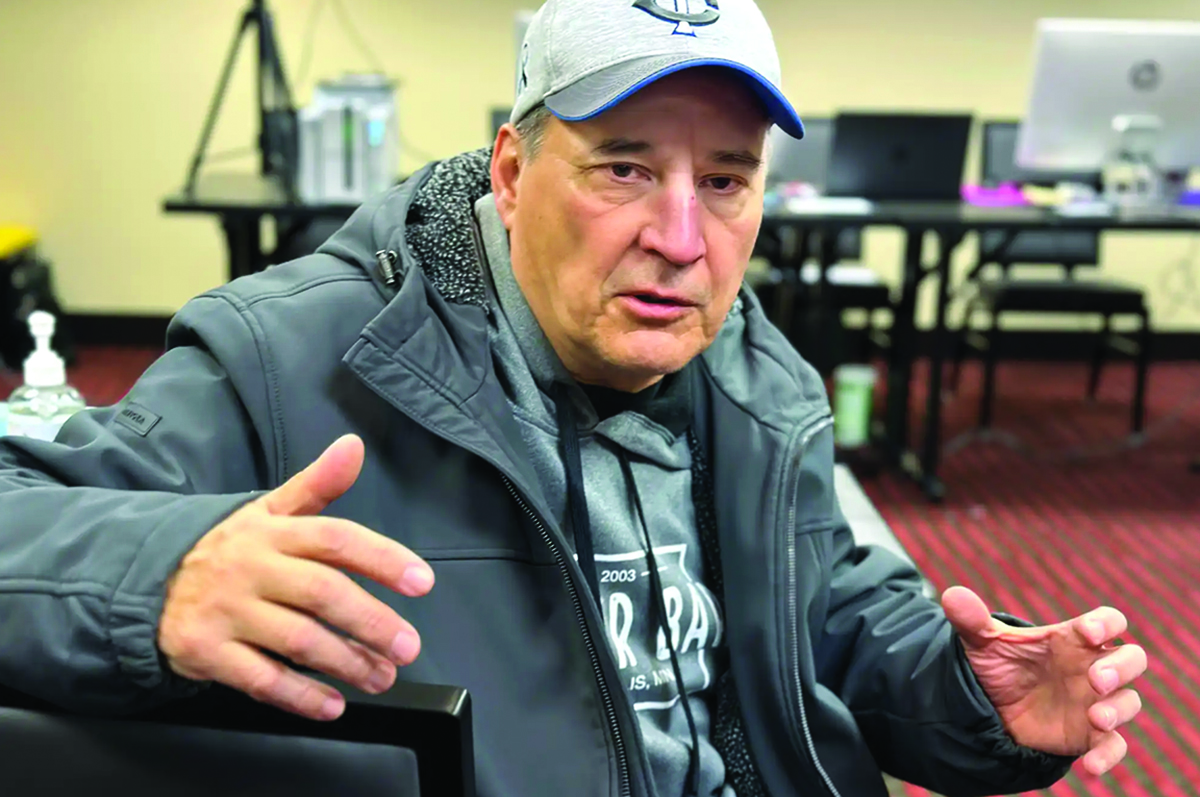
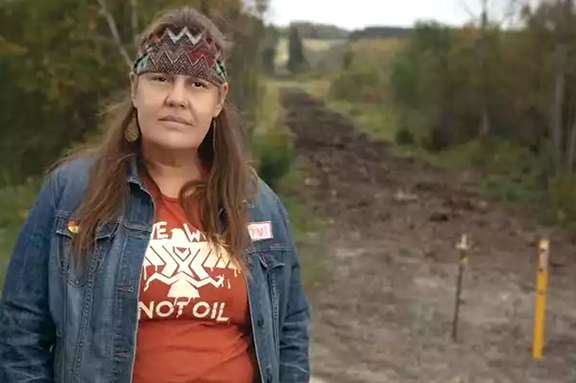
Nancy Beaulieu was instrumental in getting out the Native vote. She is a member of the Leech Lake Band of Ojibwe. She is an organizer with the environmental group MN350, and she also cohosts a radio show on Native Roots Radio on AM950.
She spoke with guest host Melissa Townsend about what drove Native voters to the polls in 2020 and the work to get out the vote this year.
Q: Was there something about the 2020 election that really got to you?
A: Quite honestly, politically speaking, I think all candidates should show up with a good heart. And because of the past administration, we’ve seen a lot of division. And we’re here to remind people that we can actually support candidates that align with our values, and that honor treaties. And we can either make or break someone’s campaign.
We’re excited about building power to voter registration, voting at the polls and work after after the election. In the last election there were a lot of candidates out there that said they were going to be our voice. But then again, they seem to forget. So not to say they’re all like that, because there are great candidates out there. I think we’re learning through this process how to play this game and maybe play it a little bit better.
Q: When you say play the game, what do you mean?
A: Well, a lot of Native folks don’t understand the political process. We’re more engaged in our tribal elections and don’t understand what the local, state and federal candidates responsibilities are. So part of the Rock the Vote program is that we explain to our relatives what the local politicians responsibilities and obligations are.
Many of our people don’t understand how important local elections are. And we see here in Beltrami County, there could be a lot of goodness if we can just remind ourselves that we’re here trying to find change in a nonpartisan way. And it gets through the division that’s out there.
It’s up to us, as people, as constituents, to learn about the political process and how it works and how we can gain leverage with all elected officials, regardless of what party they belong to, that treaties do matter and treaties are here to protect all of us.
So I think in the end, we would hope that the candidates or the elected officials would really align themselves with what really matters and what the future could bring for all of us if we honored and obligated ourselves as the treaties intended us to be in peace and to live as good neighbors. So we’re out here, just building that awareness and we’re going to continue to show up in a good way.
Q: So have you started getting out the vote already?
A: Yes, actually. It’s probably in my DNA to continue to do this work. I was just fortunate enough to attend a Battle Point Powwow here on Leech Lake and speak to the people there and why voting matters and how we could show up.
We show up as treaty people and we don’t really like to identify ourselves to a political party because a lot of our native people don’t trust the Republicans or the Democrats. Yes, we show up to vote for the blue ticket, because we feel we have a better chance of being heard within the Democratic Party than we do the Republican Party, but then again, as treaty people we try to take care of everybody, regardless of our differences. We’re just trying to find peace.
Q: Do you feel like Line 3 is going to affect the vote this time around?
A: Honestly, after the 2020, voter registration, I felt discouraged. I see who won. And I knew, you know, after line 3 got the green light by our governor. I was like, our words fell on deaf ears. And so moving into 2022 , I don’t want to do this no more but then I thought, we can’t give up, what can we do better?
I’m honored to be able to show up in political spaces on the front line, discussing why voting matters, because again, it’s our voice and our people need to understand that politics might not be for us. But again, if we’re not at the table, we don’t know what’s being served. And I think it’s important that we figure out how the system works and how to show up and show up in the best way we know how and seek change in a good way.
Q: What do you think worked? What were some of the strategies that you thought really got people out there?
A: Well, from my perspective, in the work I did back in 2020, I realized when the University of Nebraska sent their non-Native people here to collect data, we weren’t answering the doors for them. We weren’t sure who they were. And the system has been set up to fail us, so at some point, we don’t trust non-Natives knocking at our door.
So what that experience taught me was that if we’re going to go out and door knock in Indian country, we need people that look like us and we need people from our own communities. So part of the effort that we made was to create satellite stations in native communities and hire people out of those communities to door knock, they know their communities best.
And before these canvassers went out, we explained why voting is important. And please, relay this message when your door knock and don’t just register them to vote. But please be a part of that message that voting matters.
We need to do more to engage people after the election because we see a lot of the voters don’t want to vote because our words continue to fall on deaf ears. But that division that was caused by the last administration was a big boost. I’ll be honest, that’s why people showed up to the polls.
Q: Do you feel like there’s going to be as much excitement and turnout this election?
A: Yes. We are making efforts here in Northern Minnesota to explain to our Native people and our BIPOC communities why midterms are important. Some people don’t even know there are midterms or know what they are for. So, again, when we’re out there, it’s a lot of voter education.
Quite honestly, until I started working with Minnesota 350, I never voted in the primary because I didn’t even understand because again, you know, we’re mostly in tune with tribal elections or we don’t vote in the state elections because we’re never heard. So I tell people our work is not done when we register people to vote, the work has just begun.
Voting information can be found at https://sos.state.mn.us.
Minnesota Public Radio News can be heard on MPR’s statewide radio network or online.