

By Lee Egerstrom
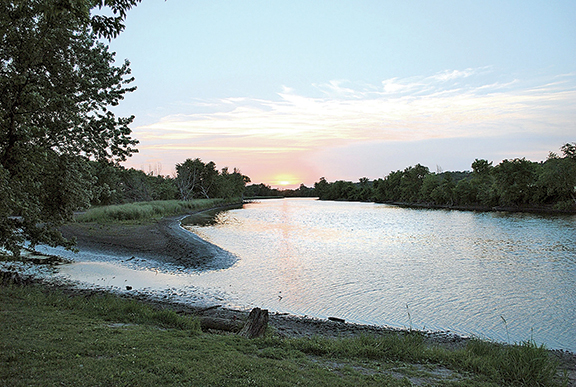
Sacred grounds that make up the Upper Sioux Agency State Park near Granite Falls will at long last be returned to the Upper Sioux Community Pezihutazizi Oyate.
The Minnesota Legislature approved the return of this historic part of Dakota homelands to the Upper Sioux Community (USC) in the just-ended 2023 legislative session. It represents the culmination of nearly two decades of pursuit by USC leaders.
Under existing laws, the Minnesota Department of Natural Resources will now seek to purchase additional land to replace the 1,300-acre Upper Sioux Agency State Park for recreational uses as part of the state park system.
For the Upper Sioux and Dakota people elsewhere, the sacred and historically significant site was dubious recreational property for the state park system from its creation in 1963.
That point was made repeatedly by Kevin Jensvold, Upper Sioux chairman, and other USC leaders in sessions of the Legislature and at public informational meetings.
In news accounts reported by the Marshall Independent and Granite Falls Advocate Tribune newspapers in April, Jensvold told people the state park was created on historic tribal treaty land and was that was a barrier for people wanting to use the land for spiritual and ceremonial purposes.
Referring to park fees, Jensvold explained at an April community meeting:
“I don’t know anybody in here who can raise their hand to say they have to pay to go visit their relatives’ graves. I don’t see anybody in here, you know, having that difficulty that this park poses.”
Advocate Tribune editor Jessica Stölen-Jacobson reported Jensvold explained how such park barriers had the Upper Sioux seeking return of the land for the past 18 years. “This request is nothing new,” he said at an informational meeting in Granite Falls.
How Dakota land acquisitions were made by the state, or “Mni Sota” in the Dakota language, and state sanctioned enterprises remain a continuing source of legislative action and by groups seeking to right wrongs of the past.
There aren’t convenient thumbnail sketches of history for the Dakota people who have resided in the Minnesota River Valley for about 10,000 years. But the Upper Sioux Community does explain much on its website https://www.uppersiouxcommunity-nsn.gov/history: “This land we call Pezihutazizi Kapi (the place where they dig for yellow medicine) has been the homeland for our people, the Dakota Oyate (Nation), for thousands of years. We have always occupied this area bordering the Minnesota River Valley, with the exception of a short period of time in the late 1800’s following the U.S./Dakota Conflict of 1862. At that time, the Dakota were either exterminated, forcibly removed to reservations located somewhere else, or voluntarily fled to avoid harm.”
Throughout the long history of the Dakota Indigenous people, the experiences before and after the 1862 U.S.-Dakota War remain among the ugliest in both U.S. and Minnesota history.
That war had its start about 40 miles downriver where the Lower Sioux Agency was located is home to the Lower Sioux Indian Community. It ended – at least the warfare part of the struggle – near the Upper Sioux Agency area in the Battle of Wood Lake.
The Minnesota Historical Society has documented much that led to the war and to the unknown hundreds of deaths from starvation and mistreatment that followed it. There no longer is any doubt about causes for the war nor how Dakota land was taken by the government as punishment following the war.
When the federal government failed to make payments for land taken from the Dakota, and people were starving, a trader told a federal agent “..let them eat grass…” His body, with his mouth stuffed with grass, was later found. The war was on.
It is most remembered across the United States by the Army’s hanging 38 Dakota men at Mankato on Dec. 26, 1862. It is in the history books as the largest mass execution in U.S. history.
But that wasn’t the end to death and bloodshed. Deaths from starvation, disease and other problems imposed on dislocated and incarcerated men, women and children continued long after that year. Some counties in southern Minnesota continued to offer bounty payments for “redskins” – or scalps.
All this has influenced efforts by land grant universities, and especially the University of Minnesota; other units of governments, and institutions such as museums to reassess their involvement with Indigenous people and abuses.
Just two years earlier, the Minnesota Legislature and Minnesota Historical Society returned half the land (115 acres) that was taken from the Battle of Lower Sioux Agency site to the Lower Sioux Indian Community. This was called “an unprecedented step” in a Feb. 21, 2021 edition of the Minneapolis Star Tribune.
In that article, reporter Kelly Smith quoted Lower Sioux President Robert Larsen explaining:
“{Our ancestors} paid for this land over and over with their lives. It’s not a sale; it’s been paid for by the ones that aren’t here anymore.”